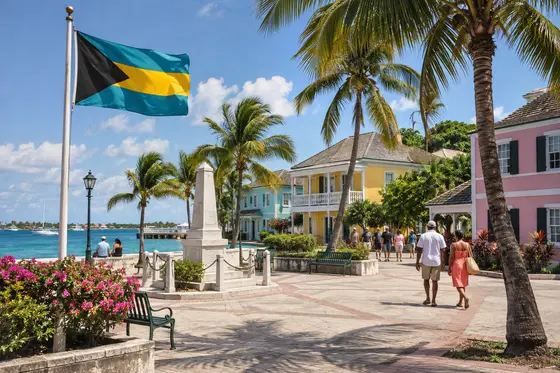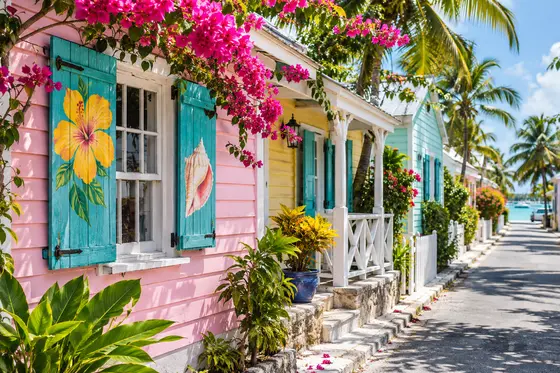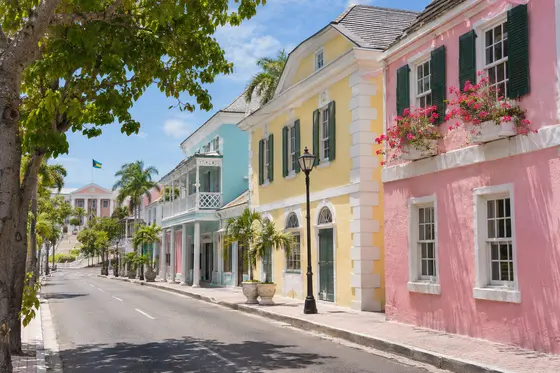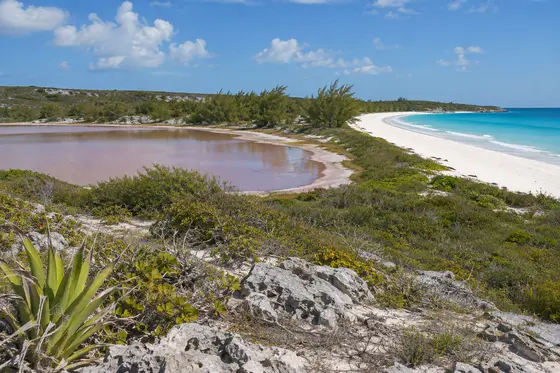
Before Nassau had a harbour full of ships and before European maps named these islands, people lived throughout the Bahamian archipelago. The story of the Bahamas has often been told through the sailors who arrived from abroad. Beginning instead with the islands' Indigenous inhabitants gives a very different account of their history.
The Lucayans and the first European arrivals
The Lucayans, related to the Taíno peoples of the Caribbean, settled the islands long before 1492. They farmed, fished, travelled in canoes and maintained links between islands. When Christopher Columbus reached the archipelago in October 1492, he encountered an established society. San Salvador is conventionally identified as the place of his first landing, though the exact location has been debated by historians.
Spanish colonisation had catastrophic consequences for the Lucayan population. Enslavement, forced removal and disease devastated their communities. Archaeological sites and surviving objects are among the few ways modern visitors can encounter this earlier chapter.
Settlements and piracy
English settlers from Bermuda arrived in the seventeenth century, including religious dissenters associated with Eleuthera. Life was difficult on islands with thin soils and unreliable freshwater. Nassau later became a notorious base for piracy. Its harbour offered shelter near busy Atlantic shipping routes, and the shallows complicated pursuit by larger vessels. In 1718 Woodes Rogers arrived as royal governor to restore British administration.
After the American Revolution, Loyalists moved to the Bahamas with enslaved people. Attempts to produce cotton were uneven and many plantations failed. The remains of estate buildings on several Family Islands tell a story of labour, displacement and adaptation more clearly than the romantic pirate tales sometimes sold to visitors.
Emancipation and independence
Slavery was abolished in the British Empire in 1834, followed by an apprenticeship period that ended in 1838. The legacy of slavery is visible in the country's settlements, customs and family histories. During the nineteenth century, shipping, salvaging, fishing and the sponge industry supported coastal communities. Nassau also benefited from blockade-running during the American Civil War and, much later, trade during American Prohibition.
Tourism grew in importance in the twentieth century. Bahamian political movements pushed for voting rights and majority rule; the landmark change of government in 1967 preceded independence from Britain on 10 July 1973. The country remains a Commonwealth nation with its own Parliament and government.
Seeing the history in person
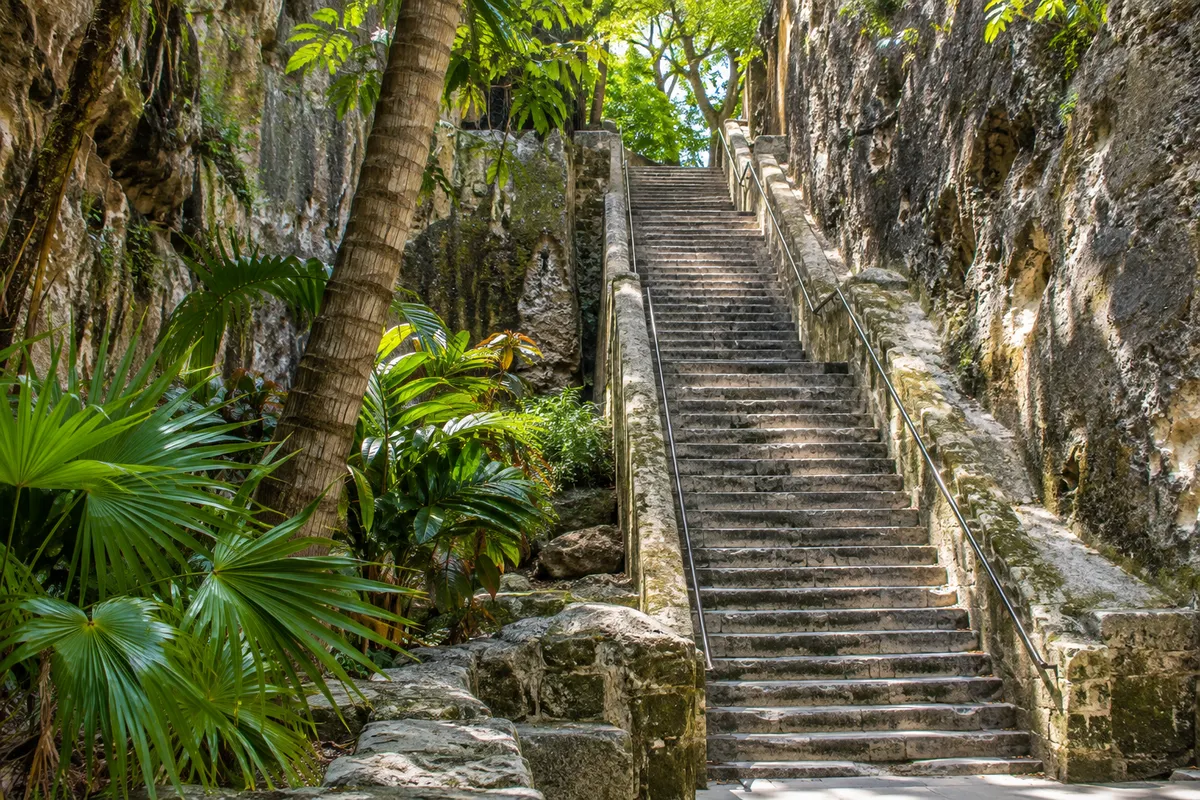
In downtown Nassau, Parliament Square, Government House and the old forts provide useful starting points. The Queen's Staircase, cut from limestone by enslaved labourers, should not be treated merely as a picturesque flight of steps. Elsewhere, ask about old churches, burial grounds, ruins and community museums before visiting. Some are on private or sensitive land. The Bahamas Parliament's history and heritage and official historical overview are good introductions for further reading.
Trade, work and changing fortunes
The geography of the country made its fortunes unusually dependent on events elsewhere. Shallow harbours and sailing routes supported ship repair, fishing and the recovery of goods from wrecks. During the American Civil War, Nassau became a meeting point for cargoes from the Confederate states and vessels carrying European supplies. Later, prohibition in the United States created another brief boom in maritime trade. Such activity did not guarantee a secure livelihood for ordinary residents. On the Family Islands, subsistence farming and fishing remained important long after commercial activity increased in the capital. Modern tourism developed in a country that already had a long experience of trade, the movement of goods and people, and sudden changes in overseas demand.
Reading the earliest history through archaeology
The Lucayan chapter is difficult to discover from standing buildings because their homes and many everyday possessions were made from materials that deteriorate. Archaeologists have instead drawn evidence from pottery fragments, shell objects, tools, burial sites and the remains of settlements. The position of such a find, whether beside a lagoon, near a freshwater source or on elevated ground, can help researchers understand the practical choices that people made. Pieces recovered from different sites also make it possible to study communication and trade between island communities. The Bahamas was part of a region in which people travelled long distances by water well before written charts appeared. It is therefore misleading to imagine each small island as a separate world. In modern heritage displays, reconstructions of settlements help show visitors what cannot easily be preserved outdoors. Remember that archaeological sites are protected places; objects should never be removed as keepsakes, even if a shell or fragment seems unremarkable.
The capital and the struggle over the islands
During the colonial period, the Bahamas occupied an awkward position between the territories of several competing powers. Its harbour facilities and proximity to shipping routes mattered greatly to governments far outside the region. The fortunes of Nassau changed repeatedly as control and patterns of trade shifted. There were reasons to construct fortifications rather than to rely simply on local sailing knowledge. The late eighteenth-century stonework at Fort Charlotte and Fort Fincastle reveals an investment in controlling the approaches to the harbour. At the time, building a large structure in an island climate required both a workforce and the movement of considerable quantities of food and equipment. These were not the modest buildings ordinarily constructed by an island household. A view of the harbour from the hill above the capital still makes it obvious why the area attracted such attention. The ships outside the narrow entrance could be seen from a good distance.
Freedom, resistance and the older settlements
The change from slavery to freedom was a long social transformation. It was shaped by laws but also by the decisions and actions of people whose names are absent from most official records. An important exception is Pompey, an enslaved man from the Exuma plantation of the Rolle estate whose memory is preserved in the name of the Pompey Museum of Slavery and Emancipation. The museum occupies Vendue House, a former Nassau marketplace where enslaved Africans, as well as goods, were sold. The building acquired a radically different function when it became a museum. Other accounts of freedom can be found beyond the commercial centre. Fox Hill, for instance, has strong ties to African heritage and maintains community observances commemorating emancipation. Such settlements are inhabited neighbourhoods, not collections of monuments. Reading about their historical associations or arranging a heritage tour is a better way to visit than wandering in and treating private homes as exhibits.
Work in the salt ponds and on the banks
On several of the drier islands, making a living from the land meant looking at rather different resources from cotton or fruit. Salt was a commercially valuable product long before modern machinery made extraction easier. Workers on Long Island, Ragged Island and elsewhere harvested and moved it after evaporation left deposits in shallow ponds. Canals, dams and low stone walls are among the physical reminders of this work. On the water, the sponge industry brought considerable income into coastal communities before disease devastated much of the resource in the twentieth century. Preparing sponges for sale and moving the harvest to merchants involved labour that is rarely visible to someone looking at the finished product in a shop. The development of commercial activity often depended on seasonal conditions, the price offered by overseas buyers and the availability of transport. For many families, it was necessary to combine several kinds of work to make a dependable living.
Putting the historical sites together
For a short visit, it is possible to study quite separate episodes of Bahamian history without leaving New Providence. The central area of Nassau gives an introduction to government and the commercial past, while the old forts help explain early naval and military concerns. At the western end of the island, Clifton Heritage National Park provides a place to learn about Indigenous and plantation history within the same landscape. Guides there can explain how the visible remains relate to archaeological investigations and written records. Visitors travelling onwards to other islands might be interested in a different comparative picture: a harbour settlement in the Abacos, a former salt-producing area on Long Island, or the churches and small farming communities of Cat Island. Avoid trying to fit all these chapters into a quick visit. They had different economic foundations, and their historical relationships with the capital changed over time. A map showing maritime distances between them is almost as useful as a traditional timeline of events.