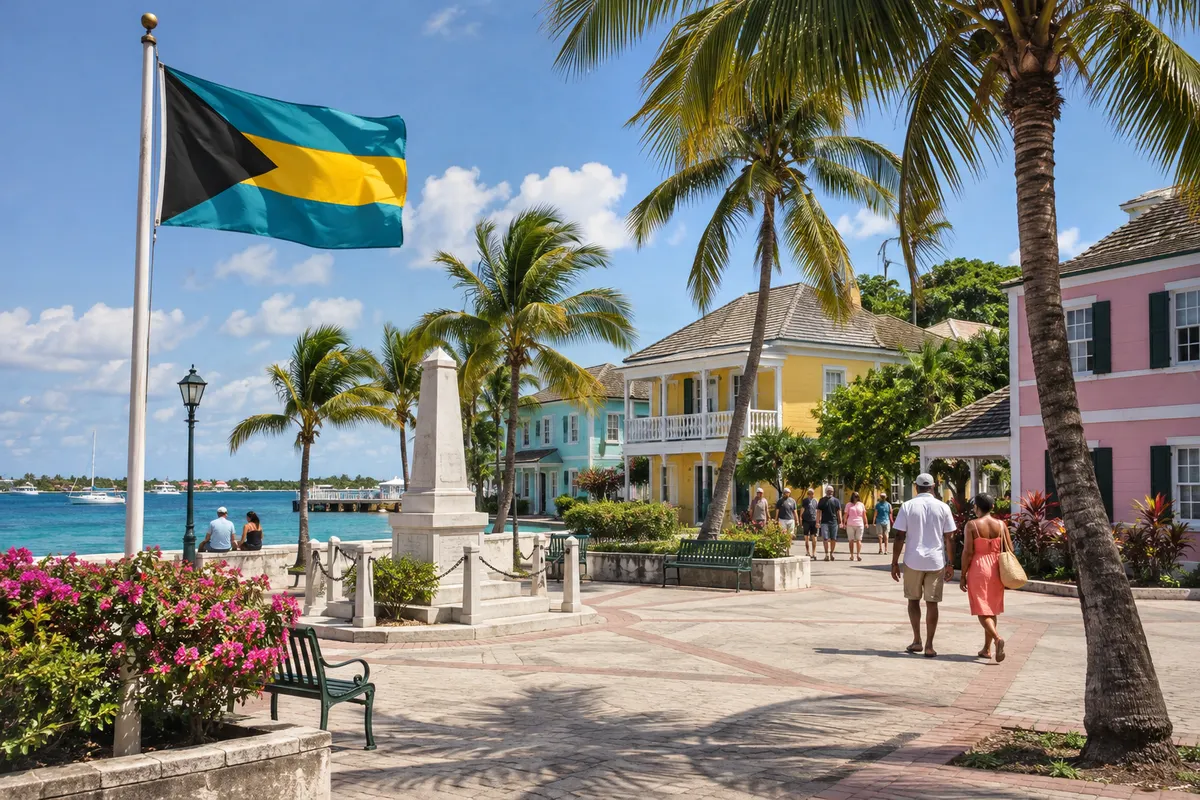
July 10 is Independence Day in the Bahamas. The date marks the constitutional transition from British colonial rule to an independent nation in 1973. It follows important changes in voting rights, political participation and local government that took place during the preceding decades. For a visitor, the holiday is a chance to learn a little more about the country beyond its familiar holiday image.
The path to independence
In the mid-twentieth century, Bahamian political movements worked towards broader representation and majority rule. Women won the right to vote and first participated in a general election in 1962. The election of 1967 marked a crucial change in government, commonly referred to as Majority Rule. Later constitutional negotiations established the framework for an independent Bahamas, effective on 10 July 1973.
Independence did not make every aspect of the past disappear. The country retained membership of the Commonwealth, and its parliamentary institutions have continued to evolve. A visit to Parliament Square or the National Archives, where public access permits, can be a useful complement to reading about this history.
The holiday today
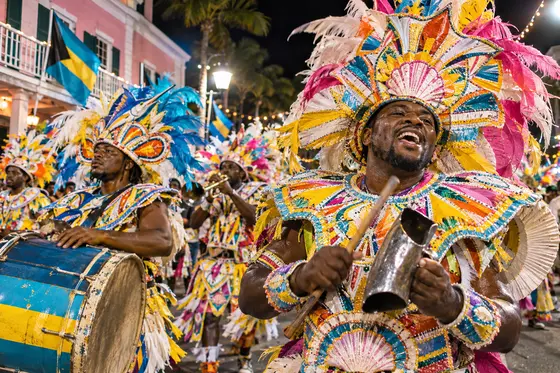
Events vary by island and from year to year. Flags are displayed, public ceremonies take place and community organisations may arrange musical performances or other gatherings. The national flag's aquamarine, gold and black are particularly noticeable around the capital in July. Some celebrations are local affairs rather than large events advertised to tourists. Check current programmes with local authorities or tourism offices if you intend to attend.
Travelling during a national holiday
Public offices and private businesses may follow holiday hours, and transport arrangements can change. Confirm essential connections in advance and allow people to enjoy their own celebrations. If a ceremony is open to the public, observe the organisers' instructions. The Bahamas Parliament history and heritage page provides more background on the country's constitutional development.
Learning the significance of a date makes a flag display or parade more meaningful. Independence Day is an occasion for national reflection as well as music and celebration, and its meaning is best understood through Bahamian accounts of the years that led to 1973.
The national flag
The flag adopted at independence is made up of two aquamarine bands and a gold band, with a black triangle at the hoist. These colours are generally associated with the water and sand of the archipelago and the strength of its people. During national celebrations they appear on clothes, buildings, boats and public displays. Although the flag has become a familiar image on tourism materials, it is a national symbol in its own right. Learning the date and circumstances of its adoption is one small step towards understanding the history behind the decorations.
From constitutional talks to 10 July 1973
Once the Bahamas had gained greater internal control over government, it became possible for Bahamian representatives to consider a new constitutional arrangement providing for full independence. Internal self-government and national independence are not interchangeable: the latter establishes a separate, sovereign country with responsibility for its international representation as well as its internal affairs. In the general election of September 1972, the question of independence figured prominently. The government led by Lynden Pindling went on to take part in negotiations concerning the transition. The constitutional document that took effect on 10 July 1973 established the institutions of independent government. These were not just ceremonial matters. Government departments had practical work to do when responsibility for relations with other countries, the conduct of public business and the operation of parliamentary institutions passed to a newly independent state. The international aspect of the change is illustrated by the United States formally recognising the Bahamas and establishing its embassy in Nassau on Independence Day, an event documented by the US Office of the Historian.
The scene in Nassau in 1973
The most widely remembered images from the independence celebrations show the lowering of the British flag and the raising of the newly adopted Bahamian one. That ceremony took place at Clifford Park in Nassau at the changeover to July 10. Public music, formal appearances by representatives of other countries and the gathering of a large crowd marked the culmination of years of preparations. The people watching had lived under very different circumstances from children born in the years after independence. For those attending, the sight of a new flag in a public place meant that the country they knew as a colony would now conduct its own affairs. Historic photographs can be especially moving when read alongside accounts from Bahamians who recall the day themselves. Beyond the capital, communities marking the occasion would increasingly develop their own ways of celebrating, and the anniversary has taken its place in the calendar alongside the country's longer established religious and community events. A visit to Nassau therefore offers a connection with a very particular place and date in modern Bahamian history.
The Bahamas after becoming independent
Today, independent government in the Bahamas operates under a parliamentary constitutional system. The British monarch, in the separate constitutional role of monarch of the Bahamas, is represented by the Governor-General. The Prime Minister and Cabinet are concerned with the conduct of government, and Parliament includes a House of Assembly and a Senate. Membership of the Commonwealth does not mean that the country is still governed from London. The meaning of the change in 1973 is apparent in its ability to pursue government policies, participate in regional organisations and establish official relationships with other states. To a visitor, many of the practical issues that have shaped the country since then are also visible: the challenge of delivering public services across separate islands, the protection of coastlines, and the changing balance between private business, tourism and other livelihoods. The choices made by an independent government affect the lived experience of Bahamians in different parts of the country. National independence does not mean that there are no challenges left for the next generation to address.
The symbols that accompany the celebrations
In addition to the national flag, visitors may see the coat of arms on official documents, public buildings and at formal ceremonies. The design includes a marlin, a flamingo and other elements that reflect the country's connection with the sea and its distinct island environments. Its motto, Forward, Upward, Onward Together, expresses the idea of a shared future. The national anthem, *March On, Bahamaland*, was written by Bahamian musician Timothy Gibson and adopted at independence. Its title is recognisable to people who have heard it performed at schools, civic events and sports fixtures. These symbols deserve to be understood in their public and historical context. Familiar colours used on a holiday T-shirt and a formal national flag are not equivalent objects. When attending an official ceremony, take note of the conduct of those around you and follow their example. There is no need to know every word of an unfamiliar anthem in order to stand respectfully while it is being performed. The occasion has its own significance apart from the entertainment on offer.
Experiencing the anniversary in the Family Islands
Travellers sometimes assume that the principal national celebration is the only one worth seeing. Smaller communities can provide a very different view of Independence Day, since local organisations determine many of the arrangements. A gathering at a church, community ground or waterfront may be primarily for residents rather than an event with multiple stages and a tourist programme. Some celebrations centre on music and food, and others involve speeches or activities for young people. Begin by finding out what is actually planned in the settlement where you are staying. Ask whether visitors may attend and whether you can contribute to the occasion by buying food or paying an admission charge. Unless specifically invited to visit a more private event, respect the distinction between an open gathering and a family occasion. Allow for limited transport, particularly late in the evening. Observing the anniversary on a smaller island can be a good opportunity to learn about the particular community's memories of independence, including the changes in its schools, businesses and connections with Nassau.