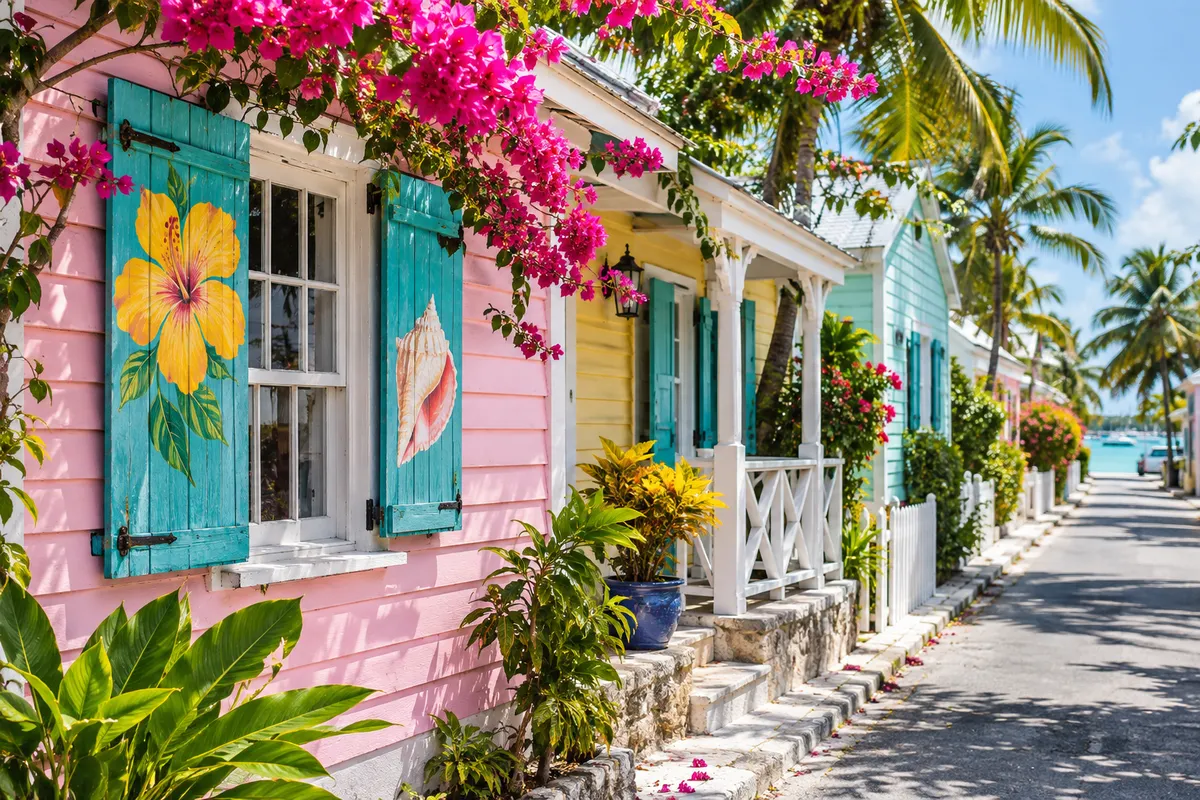
The Bahamas contains a great many islands, and customs vary from settlement to settlement. The capital is a busy commercial centre with its own rhythms, while on a smaller cay the weekly mailboat and Sunday church service may shape the local calendar. It is this variety, as much as the shared language and history, that rewards a visitor who travels beyond a resort.
Music in the islands
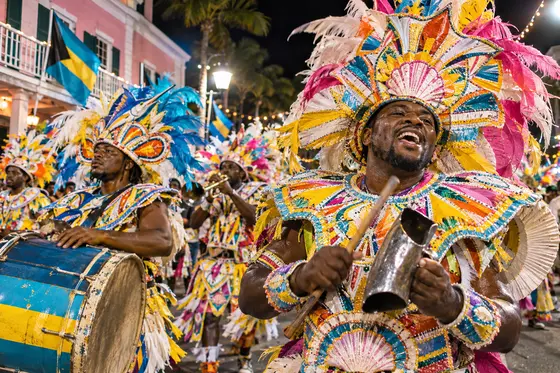
Junkanoo has become the best-known public expression of Bahamian culture. The Christmas-season parades combine great quantities of physical work with rhythm, costume design and the participation of neighbourhood groups. There is also a quieter tradition of rake-and-scrape music. Players use an accordion, a goatskin drum and a saw scraped with a metal tool to create its unmistakable rhythmic sound. You may hear bands at community gatherings, local festivals and dances, particularly on Cat Island.
Gospel music has a strong presence too. Churches are important social institutions in many settlements. Visitors who wish to attend a service should check the local time, dress suitably and avoid treating worship as a performance for their camera.
The kitchen and the market
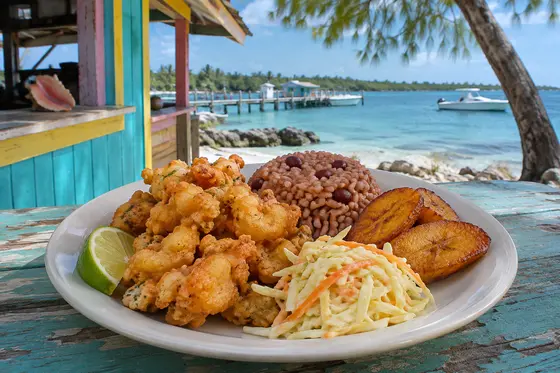
Seafood plays a prominent part in Bahamian cooking, and conch has long been used in salads, fritters and stews. Peas and rice, baked macaroni and johnnycake are familiar accompaniments. The kitchen is shaped by the availability of locally caught fish and imported produce, so what is cooked can depend on the island and the day. A food stall with a handwritten menu can be as rewarding as a formal restaurant.
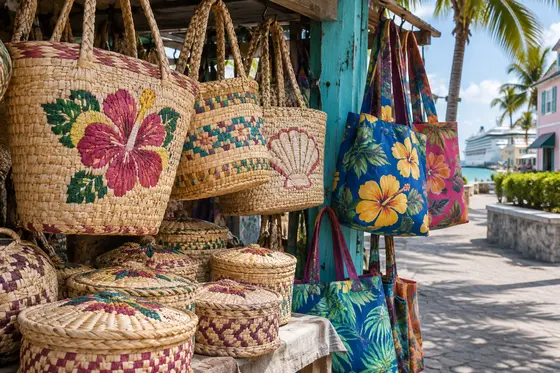
Local markets also provide a glimpse of craft traditions. Woven straw bags, hats, baskets and mats have practical uses as well as a place in the souvenir trade. Look for pieces made locally, and ask a vendor about the material and how it was woven. Some makers are happy to explain their work if they are not too busy.
Architecture and communities
Wooden cottages, verandas, shutters and steep roofs can be seen in many older settlements. Their designs owe something to colonial building techniques and much to practical needs in a hot, windy climate. In towns like Hope Town or Dunmore Town, the architecture sits next to gardens, working docks and ordinary family homes.
Travellers do well to greet people, keep noisy conversations away from houses late at night, and ask permission before entering a garden or photographing a person. The islands are a home first and a holiday destination second. The easiest way to learn about them may be by buying lunch, walking at a comfortable pace and taking time for a conversation.
The Family Islands and a sense of place
The local expression Family Islands generally refers to islands outside the capital area and Grand Bahama. The term conveys connections rather than isolation. Bahamians may have relatives in Nassau or overseas while retaining ties to a particular island or settlement. Seasonal visits, church gatherings and family occasions bring people home. Many settlements have a history of boatbuilding, fishing, farming or other practical trades that does not immediately reveal itself to a holidaymaker. A visitor who looks at the boats, churches and houses with curiosity will discover these local differences. No single festival or national dish can describe every Bahamian household.
Everyday speech and storytelling
English is the language used in formal education and official Bahamian documents, but the language of a family conversation can have a great deal of local character. Vocabulary, pronunciation and expressions vary, and in some circumstances speakers move readily between a more formal register and local forms of English. Visitors need not try to imitate an accent; a friendly greeting and a willingness to listen are preferable to repeating unfamiliar words without understanding them. Local names for plants, foods and kinds of weather may contain the practical observations of people who have lived in the islands for generations. Traditional stories have a similar quality. Bahamian folktales include characters such as the cunning spider Anancy and trickster rabbit figures found elsewhere in the African diaspora. In oral storytelling, a phrase or brief song can recur several times as the action unfolds. The skill of a storyteller lies partly in the timing of these repetitions and the way the listeners are invited to respond. Reading a few Bahamian stories before a visit makes the language wonderfully expressive rather than unfamiliar.
The small boats that connect the islands
Life on the islands has long involved making, maintaining and using boats. Before regular flights and modern roads, a boat provided a means of delivering supplies, visiting family, taking a catch to market or moving from one home to another. In the Abacos, Man-O-War Cay developed a major reputation for boat construction. Craftspeople there also make canvas goods and work with wood, although the types of boats produced have changed with available materials. Wooden Bahamian sailing sloops have an especially recognisable silhouette, with deep hulls, long booms and substantial canvas sails. They can be seen in action at traditional regattas, where crews and families from different islands come together. The annual Family Island Regatta at George Town on Great Exuma is a notable example. Boat racing brings together many of the skills used in ordinary seamanship: judging the wind, anticipating a change in water conditions and sharing the work on board. A regatta is also a social event, with discussions ashore that may be at least as spirited as the racing.
Fabric and the designs of Andros
Not all Bahamian craft work consists of straw weaving. Another local tradition to look out for is brightly patterned fabric, notably Androsia batik. The designs are applied by a method in which wax resists dye, so the areas covered by wax retain their underlying colour while surrounding areas absorb the new one. Repeated stages can produce a variety of effects. Motifs drawn from flowers, leaves, shells and the underwater world connect the finished material with its island origins. The Androsia workshop began production in Andros in 1973. It has offered visitors opportunities to learn about the work of the fabric makers, with arrangements made in advance where necessary. For anyone looking for a useful reminder of a holiday rather than a large decorative object, local printed cotton is worth considering. Find out whether the material needs any particular care and ask about the maker rather than judging a piece only by the colours.
Painting, sculpture and Bahamian art indoors
It is sometimes assumed that gallery visits are suitable only for a rainy day in a beach destination. The National Art Gallery of the Bahamas provides an exception to that way of thinking. The museum is housed in Villa Doyle, a historic building on West Hill Street in Nassau, adapted for its present purpose after acquisition by the Bahamian government. Its collections and temporary exhibitions can draw attention to subjects that tourists do not usually encounter, such as migration, land, family relationships and social change. The life of an island does not have to be expressed through paintings of palm trees or scenes of the sea. Some artists work with found materials, paper, textiles, photographs or objects familiar from everyday life. Try comparing the tools, materials and perspective in an exhibition with what you have seen in the streets and markets nearby. Check the gallery's actual exhibition programme and admission arrangements before going. A worthwhile afternoon need not involve several museums; an unhurried hour or two in one of them can be enough.
Family occasions and the value of local knowledge
During a stay on a smaller island, it may become apparent that people have many ways of remembering places. A stretch of road might be explained by reference to a family that used to live there, a shop that has closed or an old school building. Maps may show the official name of a settlement, but knowing this additional history can make the description of a journey easier to understand. The same kind of knowledge is passed on when relatives prepare familiar dishes, teach a young person to fish or explain how to mend a boat. Visitors who have been invited into a home or to a community event should appreciate that invitation on its own terms. Being welcome does not automatically give permission to photograph everyone present, fall into private conversation or post information online. Ask what is expected of a guest, rather than trying to turn the occasion into part of a sightseeing itinerary. The people you meet on a short holiday also have commitments and lives of their own.