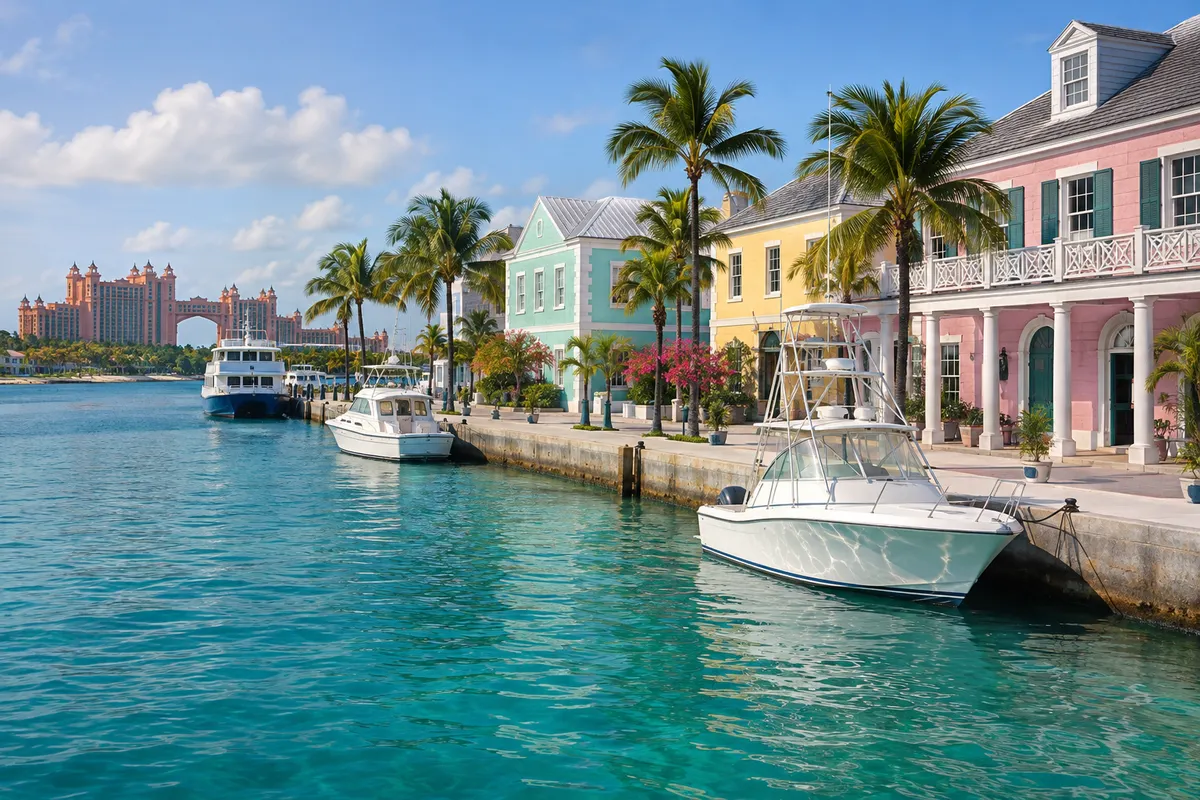
A first trip to the Bahamas does not need to include ten islands. The country stretches over a considerable area, and the distances between destinations matter more than the dots on a map suggest. Start by deciding whether you want the convenience of a city, a beach holiday on a smaller island or time spent exploring by boat.
Pick a base that suits your holiday
Nassau and Paradise Island offer the widest choice of accommodation, attractions, organised trips and restaurants. They are a sensible choice for a few nights or a visit with limited time. A holiday on Eleuthera or Great Exuma tends to involve more independent planning: a beach you want to see may be a considerable drive from your room, and a boat outing can take most of a day. The Abacos suit those interested in the water and small harbour settlements.
Arrange the journey in order
Check flights first, particularly if your final destination is not New Providence. Domestic flights and ferries do not all operate on the same timetable. Connections purchased separately may not be protected if a flight is delayed. Ask your accommodation how to get from the airport and whether hiring a car is helpful. The islands drive on the left, which takes concentration for drivers from countries accustomed to the right.
On a small island, it is useful to know which shops sell groceries and where you can buy fuel. Reservations are practical for popular boat trips; keep at least one day free in case the weather prevents an outing. If you are travelling in the storm season, read cancellation terms before paying.
Give yourself time on land
Spend a morning in a town before heading to a beach. In Nassau, take an interest in the old buildings and markets. On a Family Island, find a place to eat freshly prepared fish or conch and buy provisions locally. Avoid trying to squeeze a second island into the last afternoon of a holiday. A comfortable final night near your departure point can save a great deal of anxiety.
For entry requirements and current transport arrangements, use the official travel information and confirm details with your carrier.
A short checklist before you leave
Keep your arrival address and transport booking together with confirmation of the return flights. Work out how you will reach the first hotel without internet access. Confirm that you understand the terms of the excursions that depend on sea conditions. Carry some local spending money, although cards are commonly accepted in larger establishments. The Bahamian dollar is pegged at par with the US dollar, and US currency is widely used, but you may receive change in Bahamian currency. Before booking a second hotel, work out the cost of transferring between them. It is often simpler to spend an extra night on one island. These modest preparations make the first evening much more enjoyable.
Understand the scale of the islands
Nassau is the capital of the country, not the name of its main island. It sits on New Providence, with Paradise Island just across the harbour. Freeport is on Grand Bahama. Great Exuma, Long Island and Eleuthera are separate islands, each with its own airports, roads and communities. The word cay usually describes a small island, but several of the settlements on the cays are established communities rather than deserted beaches. This distinction helps when reading descriptions of holiday rentals and excursions.
Look at the exact location of a property instead of relying on a search result headed Bahamas. Ask what the surrounding area looks like from the ground. Can guests walk to the sea? Is the beach accessible without entering a neighbour's land? Is the nearest restaurant actually a reasonable walk for dinner? In downtown Nassau you can explore quite a bit on foot, but circumstances may be quite different at a remote beach house on a Family Island. A sea view and a convenient swimming beach are not necessarily the same thing.
Check the gateway before choosing a hotel
Start with your international flight options and compare the airport codes. Nassau is served by Lynden Pindling International Airport, coded NAS. Great Exuma is GGT, Marsh Harbour is MHH and Freeport is FPO. Eleuthera has more than one airport; you normally choose the one nearest to your part of that very long island. If you are looking at accommodation in a small settlement, put the airport and the accommodation on the same map before committing to a flight. The official island guide provides a useful starting point for identifying the different gateways.
Think about both nights of the holiday at once: arrival and departure. The nicest accommodation at the beginning of a beach can be rather impractical if reaching it involves a demanding early morning journey to catch your return flight. Compare your options with the actual times of check-in and check-out, and clarify whether a host can store your bags for a few hours. A relatively uneventful last morning is a luxury that does not require a luxurious hotel.
What to expect away from the major resorts
On a larger resort property you may be able to eat, swim, shop and arrange outings without ever leaving the grounds. Outside town on the smaller islands, the rhythm of the day is different. Lunch service may finish well before dinner service begins, and shops and businesses can have limited hours, particularly on Sundays and holidays. Ask your host where the neighbours buy their food and when the nearest shop is normally open. Carry enough drinking water for the day's outing rather than planning to buy it on an isolated beach.
In village streets, give people the same privacy that you would expect in your own neighbourhood. A beautifully painted house is not necessarily a historic building open to the public; it may be someone's home. Ask before taking photographs of people or entering a waterfront yard to look at the boats. A polite greeting when entering a small business is a natural beginning to a conversation. These seem like ordinary courtesies, but they make a real difference when you are staying in a settlement that is not primarily a resort town.
Sort out money and everyday practicalities
Find out what payment methods your host and any small tour operators accept. A debit or credit card may be useful for a large purchase, but it is not a good sole source of payment if a terminal is temporarily out of service. Carry a manageable amount of cash in smaller denominations for incidental expenses. Review your bank's foreign transaction and cash withdrawal fees before travelling. Ask whether gratuities, service charges and taxes are already shown on bills so that you can make a reasonable comparison between prices.
It is also worth checking room facilities rather than taking familiar conveniences for granted. Does the accommodation have working air conditioning in the bedroom, a reliable way to contact the host, and a refrigerator if you need one? Travellers who depend on electrically powered medical or mobility equipment should confirm the electrical arrangements directly with the property. Save a map of your destination and the contact details of transport providers for offline use. Keep the paper address of the accommodation as well, in case a phone battery dies during the journey.
Build an uncomplicated first full day
For Nassau, plan breakfast, a walk through a part of town that interests you, lunch and a nearby beach. In Great Exuma or Eleuthera, stop at a supermarket before driving to a remote stretch of coast. On either island, it helps to investigate how far you can walk along the beach and whether there is an establishment where you can use a toilet. Pack a bag for this purpose rather than taking everything you brought on the plane. Leave valuables secured at your accommodation where practical and be mindful of local advice about personal safety.
Before going into the water, find out where people are swimming and look for posted conditions and warnings. Choose designated swimming areas and obey lifeguards' instructions. Sea conditions and currents are not obvious just from the colour of the water. The travellers' health guidance from the CDC is useful reading before travelling, especially if your itinerary includes prolonged outdoor activities. The main objective of the day should be to orient yourself, get accustomed to the weather and discover which activities you would most enjoy doing later in the week.