Harbour Island is called Briland by many of its residents. It is reached from North Eleuthera by a short boat crossing. Although quite small, it has its own character: old cottages, waterfront docks, narrow lanes and a long stretch of Atlantic beach on the opposite side from the harbour.
Dunmore Town
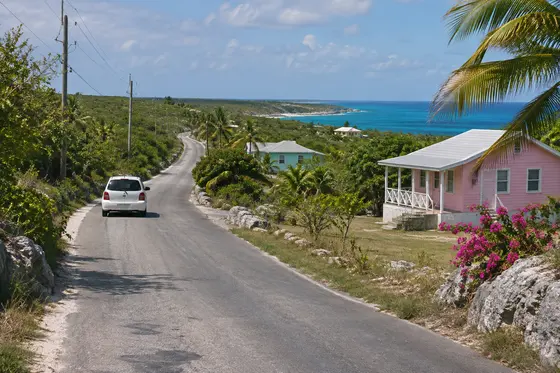
Much of the settlement can be explored on foot. Wooden houses in pastel colours stand close to the street, with verandas and gardens behind low fences. Architectural details are particularly interesting in the morning light, when the older streets are quieter. Respect private property and do not open gates or walk into gardens to take photographs. A locally hired golf cart is a common way to get around, but the usual road and parking rules still apply.
Pink Sands Beach
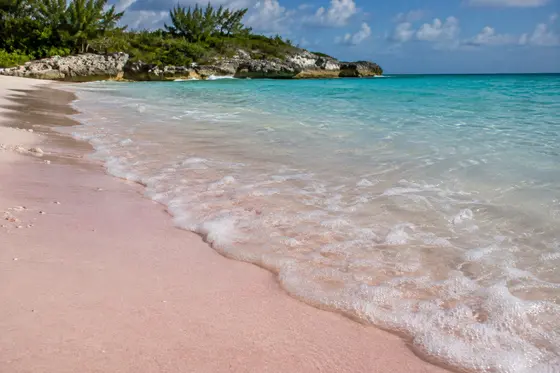
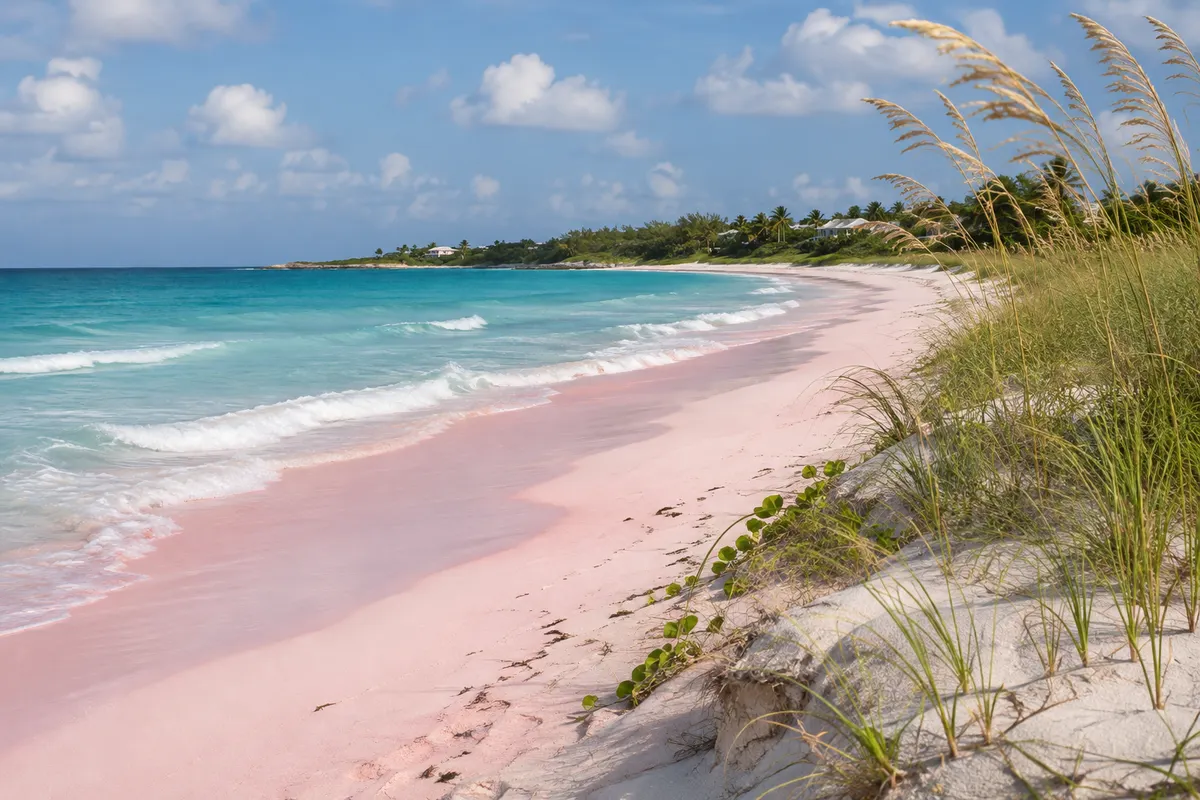
The beach is famous for its subtle rosy tone rather than a bright artificial pink colour. Small fragments of red and pink marine organisms mix with paler carbonate sand. The colour changes with moisture, sunlight and time of day. The ocean side can have waves and currents; decide whether to swim by looking at the actual conditions, not just the reputation of the beach.
Walking for an hour along the strand is often more rewarding than trying to find a particular photograph. Keep away from vegetation on the dunes, and check which access paths are public. Some stretches have hotel facilities intended for guests.
Getting there and staying
Book travel to North Eleuthera and arrange onward transfer to the dock. The water taxi is the final leg, and luggage needs to be carried or handled accordingly. Allow extra time if arriving late in the day. Harbour Island is generally a more expensive place to stay than many larger islands, so compare complete room rates and meal options. It also works well as a day trip from northern Eleuthera, provided that you confirm the last water taxi and allow time to return.
Time at the harbour
The western waterfront is a good place to see the rhythm of boats running between Harbour Island and Eleuthera. Watch from a place that does not obstruct cargo handling or people boarding. Restaurants and small shops are scattered around the town, so it is easy to combine the crossing with a walk through its streets. Travellers staying on the larger island should remember that there is no continuous road between the two. Note the return dock and the time of the last service before spending an afternoon on the ocean side.
The story in Dunmore Town's buildings
Harbour Island's older houses are often described in terms of their New England influences. In the late eighteenth century many Loyalist settlers arrived in the Bahamas after the American Revolution, and some brought familiar building traditions here. The houses and streets reflect subsequent generations of Bahamian residents as well as that particular period. Their present-day owners may have repaired or adapted them according to changing family circumstances and the demands of a salt-air environment.
Take particular notice of the shutters and the way porches face the street. Architectural details such as small windows, shade and raised foundations have practical significance. The pink and white St John's Anglican Church on Dunmore Street dates to 1768 according to the island's official visitor information. It remains a place associated with worship, and visitors should enquire about appropriate entry rather than assuming the doors will be open for sightseeing.
The island's two very different shores
Consider setting aside time for both sides of the island rather than making the town a shortcut to Pink Sands Beach. At the harbour, organised boat traffic and the loading and unloading of goods provide an insight into how a small offshore community functions. The presence of ferries matters for residents buying supplies, tradespeople and families, not only people taking holidays. From an appropriate spot on Bay Street, the mainland can form a distant backdrop to this everyday activity.
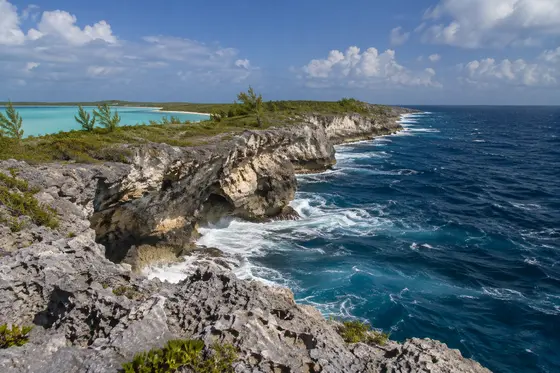
The Lone Tree at Girls Bank is a peculiar local landmark, a large piece of driftwood that came to rest in the shallows during Hurricane Andrew in 1992. Its exact journey is the subject of several local explanations; the tourism ministry's account records some of these traditions. The changing water level influences how clearly it can be seen. It is best appreciated without scrambling into the muddy shallows or disturbing the object itself. You might enjoy the light around the harbour towards evening from the waterfront, then walk through the town before dinner. On the Atlantic shore, meanwhile, the morning light comes from the direction of the ocean and creates a completely different atmosphere.
Choosing your room and getting around
Because the place is compact, a property described as a short walk from the beach may genuinely be a short distance away, though terrain, the heat and the route to a public beach entrance all play a part. Read the location on a map before paying more for a room advertised as central. A harbour-side inn suits guests who enjoy taking breakfast or dinner in town. Oceanfront accommodation appeals to those who want to go back to their room between visits to the shore. Ask about the facilities included in the room and which are charged separately.
Beach equipment, bicycle hire, golf carts and transfers from the dock should be taken into account when comparing the total cost of a stay. Couples may find that they can do most of their exploring on foot. A family with small children and several bags of beach equipment will have different considerations. Golf carts are vehicles and should be driven cautiously on the settlement's narrow roads, particularly at junctions and around pedestrians. If you decide to hire one, ask the provider about the rules of the road, parking and arrangements for its collection. Walking is often simpler for one particular shopping or sightseeing trip.
Meals between the town and the shore
There are several ways to approach eating on Harbour Island. Some visitors arrange meals at their hotel while others make a point of finding small Bahamian establishments in the settlement. A simple lunchtime plate of rice, fish and a side dish is quite distinct from a lengthy dinner on an ocean-facing terrace. When visiting for more than a day, mix the two styles according to your budget and what is convenient for your plans.
Seafood may be prepared fried, grilled or in a stew. Conch fritters are commonly shared as a small dish, although the availability of particular fresh ingredients depends on fishing and deliveries. Ask what has been caught recently, and be aware that conservation regulations may limit certain seafood at different times. Avoid requesting out-of-season species simply because they happen to appear in an old restaurant photograph. In town, it is worth looking for baked goods, fresh fruit and places to pick up water before heading to the beach. For a special dinner, check reservation requirements and the full cost of the meal. Plan your evening transport as well as your appetite if the restaurant is some distance from your room.
Boat outings and a second day on the island
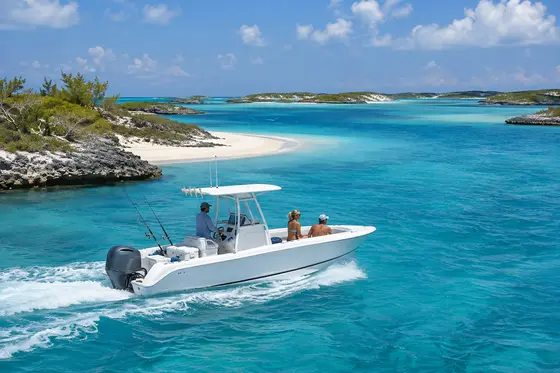
After your first visit to the beach, try using a second day to explore the area from the water. Reefs and the changing depth between Eleuthera and Harbour Island are an important part of the geography. The name Devil's Backbone refers to the reef area near the northern end of Eleuthera, and its history is associated with shipwrecks and the difficulty of local navigation. A properly organised boat trip is a much more straightforward way for most guests to experience the surrounding waters than attempting to operate an unfamiliar boat independently.
Guides may arrange snorkeling or scenic cruises depending on winds and sea conditions, so discuss precisely what is included before booking. There is no requirement to enter the water to appreciate a coral landscape from a boat. Check whether the operator provides shade, drinking water, flotation aids and a means of boarding that suits everyone in the party. If you are visiting from Eleuthera for just one day, concentrate on the town and beach instead: having to rush back to a water taxi after a lengthy marine excursion removes much of the flexibility. An overnight stay allows you to enjoy the harbour after day-trippers have departed and to watch the beach change in character as the following morning begins.