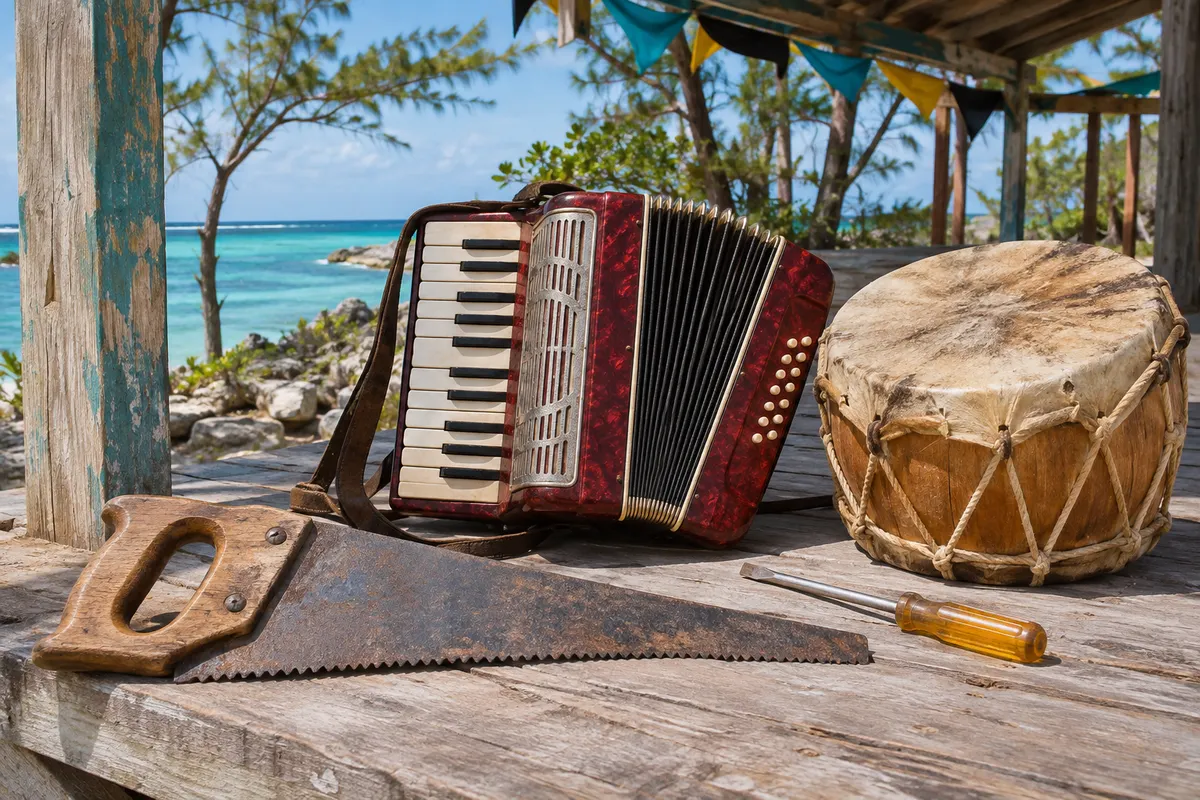
A saw is an unusual musical instrument if you are used to seeing one in a carpenter's workshop. In Bahamian rake-and-scrape music, its metal surface produces a rhythmic scraping sound that cuts through lively accordion melodies and drumbeats. Hearing the combination in person gives a much better impression of the style than reading a list of instruments.
The instruments
The rhythmic sound is made by scraping the teeth or surface of a handsaw with a metal implement, often a screwdriver. An accordion usually supplies the tune and a goatskin drum adds depth to the rhythm. The instruments can be surprisingly portable, which suited gatherings where expensive musical equipment was not readily available. Players vary the rhythms and accent patterns, and the interaction between them is a major part of a good performance.
Dance and community gatherings
Rake-and-scrape traditions have been maintained in several islands and are particularly closely associated with Cat Island. Music accompanies dances such as the quadrille and other social occasions. It is part of a wider musical heritage that includes Junkanoo, religious music and contemporary Bahamian performers. The style does not belong solely to the tourist stage.
Visitors may encounter music at local celebrations, organised festivals or community venues. Actual performance schedules depend on the island and time of year. Enquire through the venue or a local tourism office, and do not assume an event will happen on a particular evening. When photographing, avoid crowding the musicians or obstructing people who are dancing.
Listening to the islands
The simplest way to enjoy rake-and-scrape is to pay attention to the small musical exchanges. The scrape answers the melody, the drum marks the rhythm and changes in speed involve the whole group. If the opportunity arises to speak with a musician after a performance, ask where they learned to play and about the occasions when the music was heard growing up. Personal accounts can add a great deal to an experience that may otherwise last only a few minutes.
A very different rhythm from Junkanoo
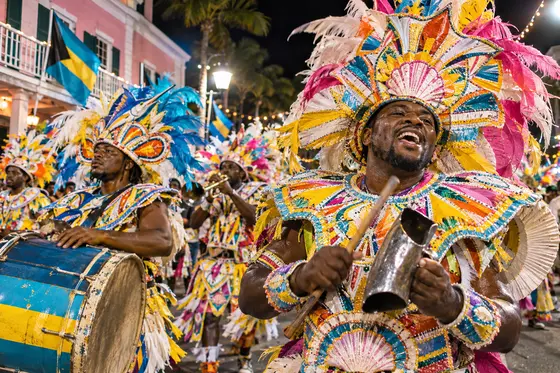
Both musical traditions are associated with movement and community, but the size of the performance and the instruments give them different characters. In a large Junkanoo parade, percussion and brass can fill a whole street with sound. A small group playing rake-and-scrape can perform in a much more intimate space. The steady scraping rhythm helps a listener follow the tune even when the musicians change tempo or style. The accordion, by contrast, can carry a very recognisable melody. Hearing both traditions during a visit offers an interesting comparison.
An instrument borrowed from everyday life
The handsaw has a certain advantage as a musical instrument because its metal blade offers several different sounds. The scrape of the teeth provides a clear, repeated rhythm, while striking the blade can give the player another sort of accent. Subtle movements change the tone and the length of a note. It is very different from playing a saw with a bow to produce a sustained melody, a practice more familiar in some European and North American music. Rake-and-scrape players use the material of the tool in a distinctly rhythmic way. An old barrel and animal skin, meanwhile, could become a drum. These instruments tell a story about a time when it was possible to make lively dance music with whatever the musicians had available. The accordion was an imported instrument from a different musical tradition, but it came to occupy an important place in the ensemble. The particular combination of resources and techniques is part of the music's history, not simply a curiosity for an audience watching three musicians on a stage.
Music for the quadrille and heel-and-toe
The dances traditionally associated with the music help explain the way tunes are arranged. A quadrille involves dancers moving through recognised figures, often in pairs or sets, so the musicians need to provide a rhythm that people can follow and a degree of predictability about the length of a passage. Heel-and-toe dances have another characteristic movement and interaction between partners. The tunes may have their own variations, but the purpose of the music is to accompany the dancers, not to interrupt them each time a musician wants to introduce a completely new idea. There is little need for a complicated sound system when instruments and footsteps can be heard quite clearly. In a gathering with experienced participants, a newcomer can spend some time watching first. If invited to join a dance, follow the people who already know the steps rather than attempting to learn the whole sequence immediately. Seeing the music used in this way makes it easier to appreciate why it has been preserved over so many generations.
Cat Island and connections across the archipelago
Cat Island enjoys a special association with the music, but it did not develop in complete isolation from the other islands. Musicians travelled, married into families in other settlements, listened to visiting players and performed at occasions outside their own community. The music is part of a wider regional exchange between island settlements where dance and social gatherings were important. One of the informative recording projects to come from the Bahamas is Music of the Bahamas, Volume 3, in the Smithsonian Folkways catalogue. It includes instrumental performances recorded in a number of Bahamian settings in the 1950s, including rake-and-scrape from Andros. These historical recordings are useful because they preserve details of individual performances, not just an account of how a style supposedly sounded. Compare the early recordings with a contemporary Cat Island group and notice that, even when the instruments are recognisable, the musicians have their own ways of making them work together.
Two tunes need not sound alike
An enjoyable introduction to the style is the album Bahamian Rake-n-Scrape, released by Smithsonian Folkways in 2016. It features performances by Ophie and Da Websites and Bo Hog and Da Rooters, both groups with roots on Cat Island. Listeners encountering the music for the first time can use the tracks to pick out the separate parts. Compare the sound of the accordion before the main phrase begins and the way the saw enters or accents an established beat. Notice whether the singers deliver short lines while the other players carry on the same pattern, or whether the accompaniment changes around the words. In some songs, repetition is an opportunity for the musicians to alter small details of the rhythm rather than play an entirely new section. The recording's accompanying notes give some background on the pieces. Listening to several performances is rewarding because it becomes clear that the traditional ensemble leaves a considerable amount of room for individual interpretation.
Making time for music on a visit to Cat Island
Someone travelling to Cat Island specifically to hear a band would do well to enquire about performances before reserving the whole trip. The island has held an annual festival dedicated to rake-and-scrape, traditionally in June; the tourism office's Cat Island information describes it in connection with quadrille dancing. Check the dates and arrangements for the relevant year rather than relying upon a listing from a previous festival. Outside that period, music at a community gathering or local venue may be an informal affair. Ask if visitors are welcome and whether food, seating or transport will be available. A musical performance need not look like a concert to be memorable. A small group of people who have grown up with a dance sometimes make a more interesting audience than a crowd brought to see an attraction. If the evening does not turn out exactly as you expected, allow time in the following days for a chance to learn about other musicians. The rhythms belong to the people who play them, and hearing the local accounts is an experience in its own right.