Ordering lunch in the Bahamas often produces a plate whose accompaniments are as interesting as the seafood. Peas and rice, macaroni, coleslaw and plantains can provide much of the meal's flavour. Recipes differ between kitchens, and what is available at a small restaurant may depend on the week's catch.
Seafood and conch
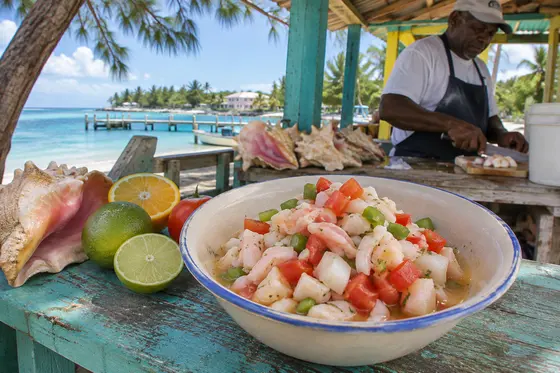
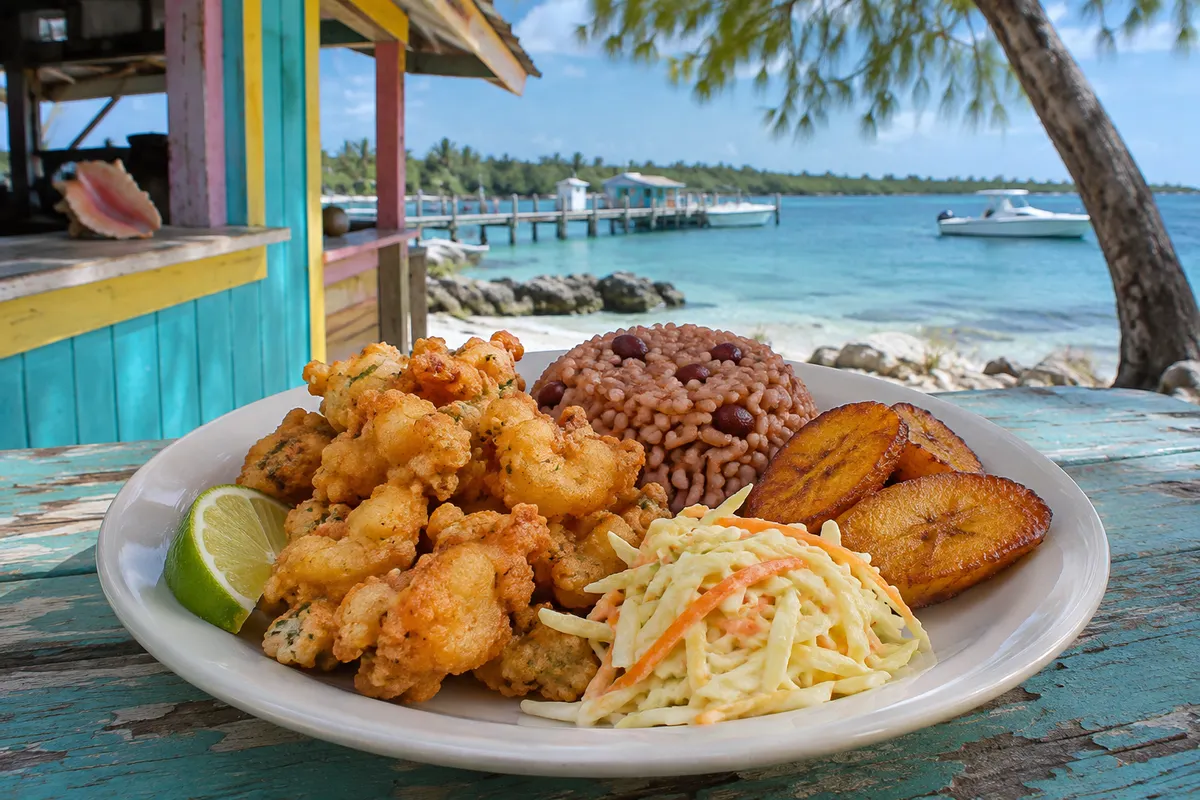
Conch has long been part of local cooking. Cracked conch is tenderised, coated and fried, while conch fritters combine chopped conch with a seasoned batter. Conch salad uses small pieces with citrus, onions, tomatoes and peppers. If you avoid raw seafood, choose a thoroughly cooked dish instead. Local fish is served fried, stewed or in other preparations. Ask what is available rather than assuming every fish on the menu was caught that morning.
What comes with dinner
Peas and rice commonly uses pigeon peas rather than the green garden peas a visitor might expect. It is a seasoned dish that works well with fish or stew. Bahamian baked macaroni is often firm enough to cut into squares. Johnnycake provides a slightly crumbly bread to eat with a savoury meal or at breakfast. Some restaurants add sweet fried plantains or a portion of coleslaw. It is worth trying different versions rather than searching for one definitive recipe.
Where to look for a meal
In Nassau, visitors often head for the Fish Fry at Arawak Cay. Elsewhere, small takeaways and harbour-side restaurants may have a daily selection written on a board or explained by the cook. Ask about prices, ingredients and wait times before ordering. On less populated islands, dinner arrangements may need to be confirmed during the afternoon.
Conch and other marine resources are subject to conservation concerns and regulations. Look for businesses that follow local rules and choose alternatives when a particular seafood is unavailable. Bahamian cooking has plenty of character beyond any one ingredient. A simple lunch of fish, vegetables and peas and rice is a satisfying way to experience it.
Breakfast and something sweet
Boiled or stewed fish is a traditional breakfast choice, though many cafes also prepare familiar eggs, toast and other dishes. Johnnycake is particularly good with a savoury stew. For dessert, guava duff is a well-known rolled dough and fruit preparation usually served with a sweet sauce. Like many regional recipes, it varies from household to household. Ask about ingredients if you have dietary restrictions, and remember that a restaurant may not have every traditional dish available every day. Checking what is being cooked rather than reading a long printed menu is part of the pleasure of finding something local.
Why the islands developed this kind of cooking
A surprising amount of Bahamian cooking is concerned with making good use of whatever was available. Fishing provided protein, while peas, rice, dried goods and flour were relatively easy to keep between deliveries. Ingredients that travelled well were valuable on islands where fresh supplies could be unreliable. Families adapted familiar recipes to different fish, cuts of meat and vegetables, and used seasoning to make ordinary ingredients interesting. There is no single historical explanation for the cuisine. It developed through generations of African, Atlantic and Caribbean influences, with considerable exchange between the islands and nearby countries.
The combinations are sometimes unfamiliar to visitors from elsewhere. A portion of baked macaroni alongside rice, for example, may look like two competing side dishes, but they have very different textures and flavours. The rice absorbs the juices from fish, and the macaroni can be eaten in firm, savoury pieces. A small spoonful of coleslaw cuts through the richness of both. What appears to be a collection of separate items on a menu works particularly well once it is brought together on the plate.
Souse, stew fish and the morning table
Chicken souse deserves a place among the dishes a visitor should recognise. A bowl usually contains pieces of chicken in a clear, peppery broth, often with potato and onion. Lime and aromatic seasonings give the liquid a sharp profile. Other versions use different meats. It is much closer to a substantial soup than a plate of fried chicken, and it makes sense as a filling breakfast or early lunch. Johnnycake and grits are familiar accompaniments. The official Bahamas tourism guide to breakfast offers a useful introduction to the different dishes, including versions that might not appear on an international hotel menu.
Boiled fish and stew fish need not mean the same thing. A lighter fish broth might be seasoned quite simply, while a darker stew can be thickened and have a more pronounced base of vegetables and spices. It is the liquid that often makes a breakfast worth taking slowly. Ask whether bones are present, especially when ordering for a child. And if a cook offers a choice of grits or bread, think of them as part of the dish rather than something brought along unnecessarily. Each soaks up the broth in its own way.
Fish, lobster and meat on the menu
Snapper and grouper are names frequently encountered on Bahamian menus. A whole fried fish often arrives with its head and tail, which may surprise someone accustomed to fillets. Ordering steamed fish can produce a very different meal, with a sauce or cooking liquid based on the cook's own seasoning. Ask which preparation is offered rather than assuming that the word steamed guarantees a bland dish.
Rock lobster, sometimes called crawfish locally, is normally the spiny variety without the two enormous claws associated with cold-water lobster. It can appear grilled, baked or chopped into another preparation. Its price, size and availability vary, and harvest is regulated. Do not plan a trip around a particular seafood unless you have checked current restrictions and what your restaurant expects to have. A restaurant that offers a less familiar local catch is worth considering.
Seafood is not compulsory. Chicken, pork, vegetable preparations, beans and substantial soups are common alternatives. Some kitchens serve a daily plate with whatever meat or fish was prepared in the morning. The advantage of a menu like this is that there may be little question about what has just come out of the kitchen. The disadvantage for the indecisive visitor is that a particular item can run out before dinner time.
A few flavours to look for in side dishes
Pigeon peas have an earthy taste, often enhanced by aromatic herbs and the ingredients cooked with them. That savoury background makes them particularly comfortable next to a piece of fish. Some rice dishes are prepared with meat or seafood stock even when no obvious pieces of meat remain. A vegetarian traveller should ask about the broth or seasoning rather than relying on the name of a side dish.
Plantain is another example of the difference between familiarity and expectation. A ripe plantain is sweeter and usually softer when cooked than an unripe green one. Both have their uses, and the slices that arrive beside dinner may be quite different from ordinary banana. A piece of baked macaroni often has a browned edge with a softer interior, while potato salad or cool cabbage offers contrast. Ordering several sides to share is a pleasant way of comparing these different tastes without accumulating far more food than you can finish.
Drinks, fruit and a meal to remember
Switcha is a local name for a citrus drink made with water and sugar. The balance between sweetness and acidity varies, especially when it is made in a household kitchen rather than bought in a sealed bottle. Fresh lemonade or a cold glass of coconut water can be refreshing on a hot day. Tropical fruit such as pineapple, banana, mango and guava appears in local drinks, preserves and baking, but its presence on a roadside stand depends on the island and season. Ask where it came from if you are interested in local produce.
Rum cakes are another common sight, particularly in gift shops. They are quite different from the warm, soft guava duff served as dessert. Rum can also appear in a dessert sauce, so travellers avoiding alcohol should enquire about the preparation. A bakery is a convenient stop when moving between towns: choose bread or a small pastry for later rather than filling every day with three large meals.
Ordering with dietary requirements
Small restaurants may prepare several dishes in one kitchen, sharing utensils or frying oil. A dish without visible shellfish is not necessarily safe for a person with a serious shellfish allergy. Tell the staff exactly what you must avoid, and choose somewhere that can discuss ingredients and preparation with you. On a smaller island, it may be sensible to arrange suitable meals with your accommodation before arriving. A little grocery shopping and access to a kitchenette can also make the week easier. For fresh seafood, a fully cooked order is the safest choice; follow guidance appropriate to your circumstances rather than taking food safety for granted because a stall is popular.